 Planning
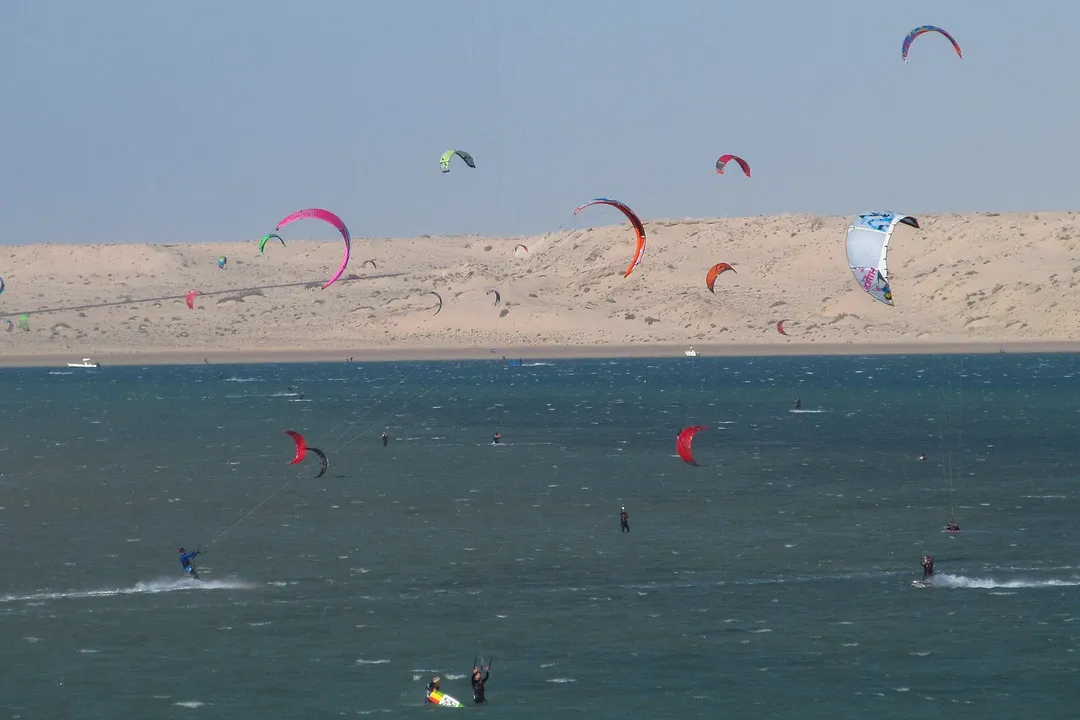
The Best Time To Kitesurf In Dakhla, Month By Month
Wind statistics, water temperature and how busy the lagoon actually gets — a straight answer for every month of the year.
Read More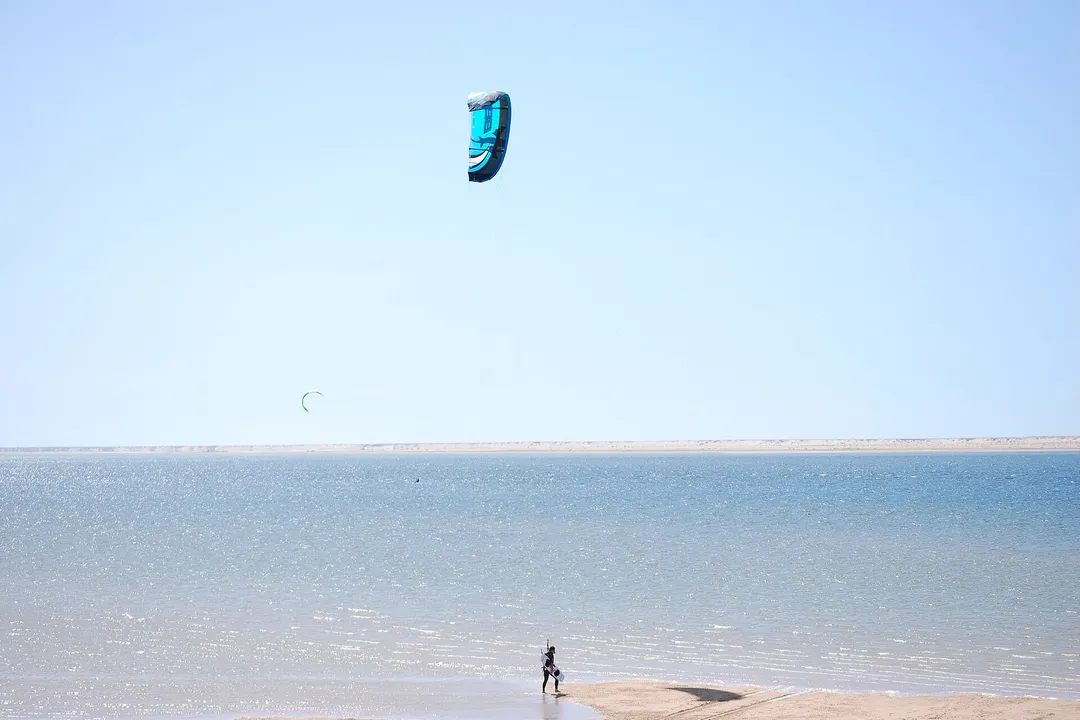
What twelve hours of tuition in flat water actually gets you, and the three things that slow most beginners down.
Out of the beginners who take our twelve-hour course, the large majority finish the week riding both directions and getting back upwind. That is the point at which kitesurfing stops being a lesson and starts being a sport you can do on your own. It is not a guarantee — bodies and nerves differ — but it is the normal outcome here, and it is not the normal outcome everywhere.
In waist-deep water, a mistake costs you thirty seconds. You stand up, sort the kite out, and try again. In deep water the same mistake costs five minutes of body dragging and a good deal of confidence. Over twelve hours, that difference compounds into roughly twice as many attempts — which is really why people learn faster in Dakhla.
Gripping the bar too hard, which tires your forearms out by hour three. Looking at the kite instead of where you want to go. And booking too few hours: eight hours will get you body dragging and frustrated, twelve will usually get you riding. If you have the time, take the longer course.
Nothing technical is required, but general fitness helps and swimming confidence is essential. If there is a trainer kite available at home, an hour with it on a beach is worth two hours of your paid lesson time.
Planning
Wind statistics, water temperature and how busy the lagoon actually gets — a straight answer for every month of the year.
Read More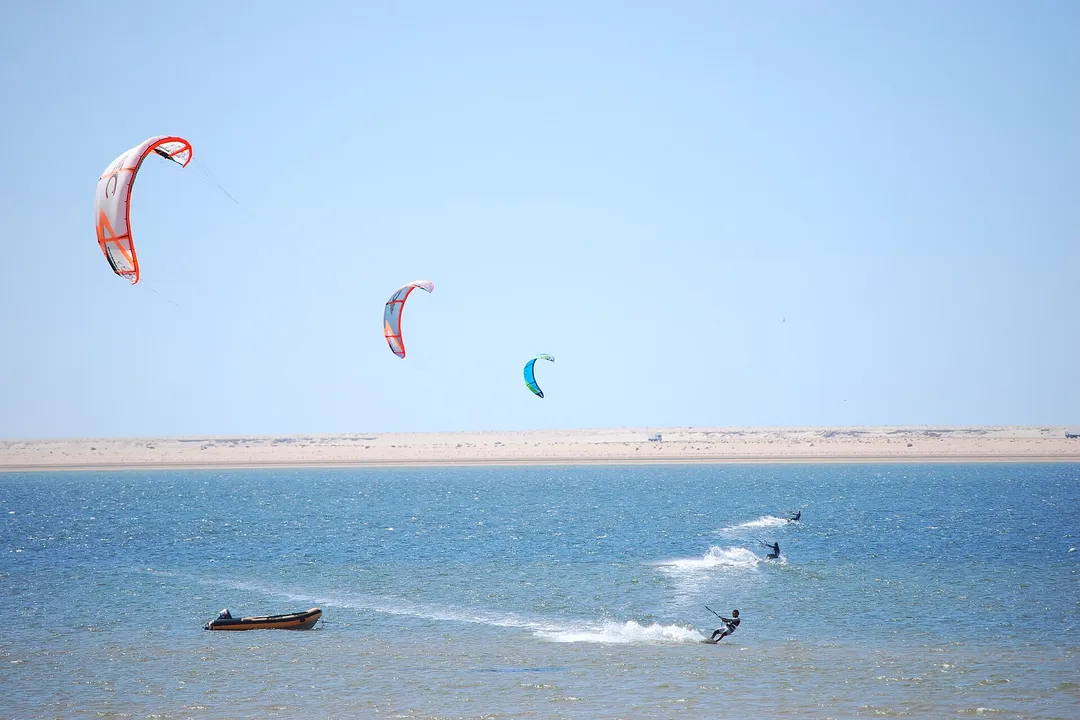 Spots
Spots
Twenty-five kilometres of empty lagoon, a boat behind you and flamingos on the sandbanks. Here is how the day runs.
Read More