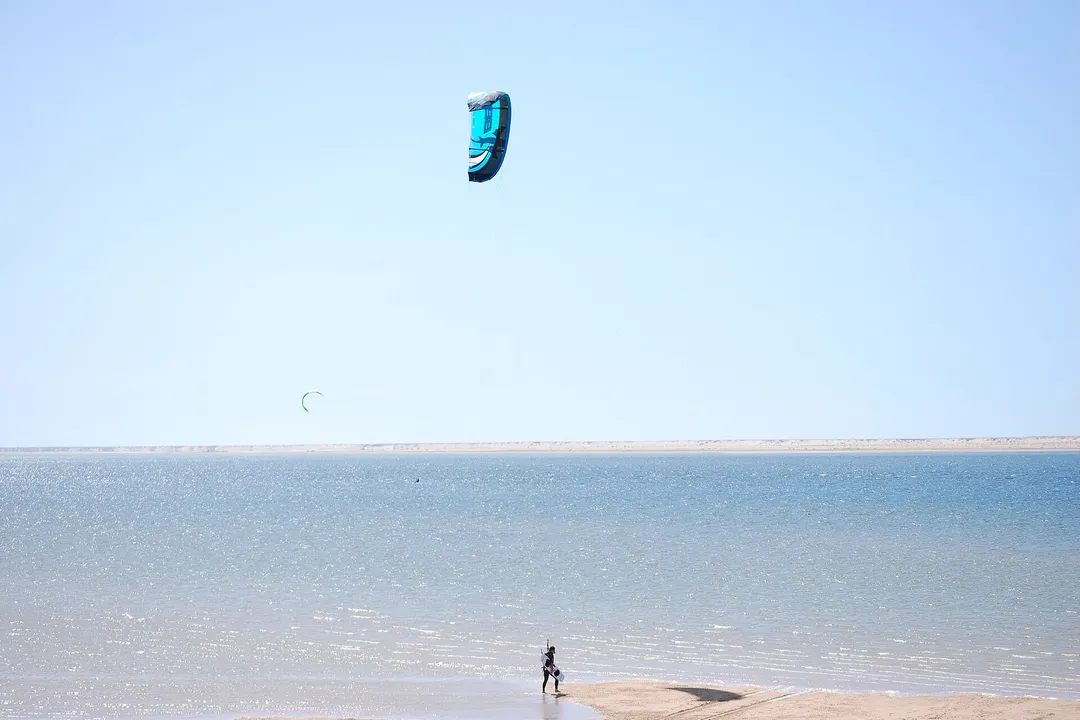
 Beginners
Can You Really Learn To Kitesurf In One Week?
What twelve hours of tuition in flat water actually gets you, and the three things that slow most beginners down.
Read More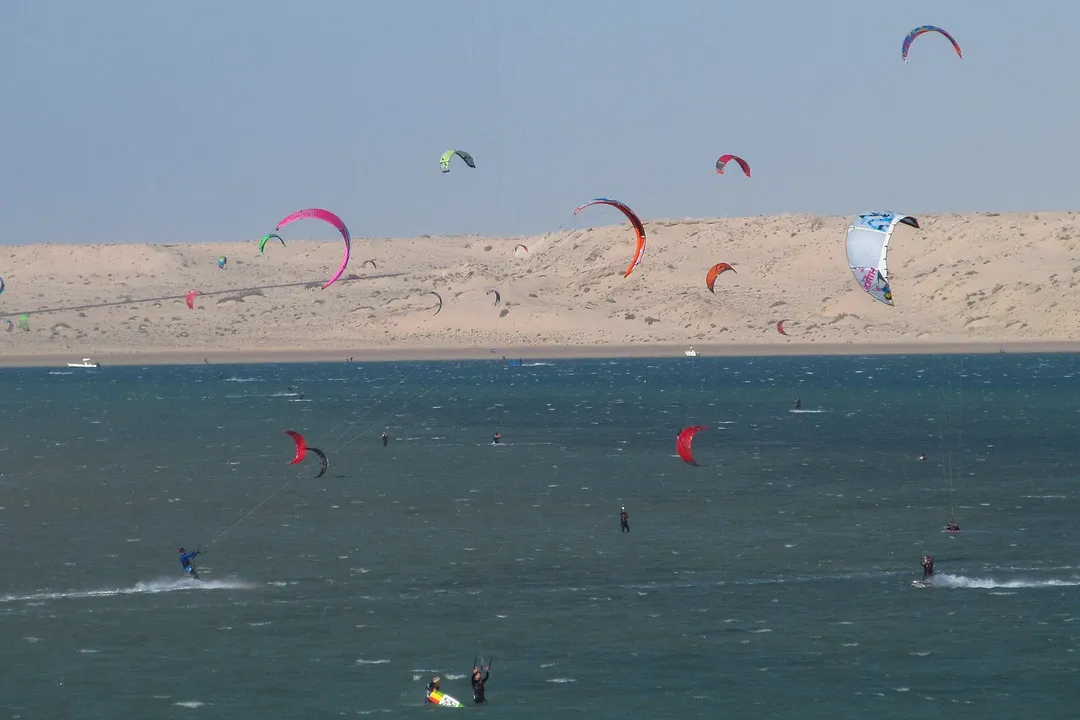
Wind statistics, water temperature and how busy the lagoon actually gets — a straight answer for every month of the year.
Dakhla is windy roughly 300 days a year, which means the honest answer to "when should I come" is almost always "when you can". What changes between seasons is not whether you will get wind, but how strong it is, how warm the water feels and how many other kites are on the lagoon with you.
The trade wind is at its most reliable and its most powerful: 20 to 30 knots is a normal afternoon and 35 happens. This is the window for freestyle at Speed Spot and for anyone who wants to be overpowered on a 7 m. Beginners still learn perfectly well, but we tend to run their lessons in the morning while it is lighter.
Slightly lighter, averaging 15 to 25 knots, with more genuinely calm days. It is the better half of the year to learn in, and the Atlantic swell is bigger, so wave riding at Foum Labouir and Oum Lamboir comes into its own. Water sits around 17 to 19°C, so a 4/3 is right.
Christmas and Easter fill up months ahead — book those by September. The quietest good weeks are late November and the first half of February, when the lagoon is close to empty and camp prices are at their lowest.
Beginners
What twelve hours of tuition in flat water actually gets you, and the three things that slow most beginners down.
Read More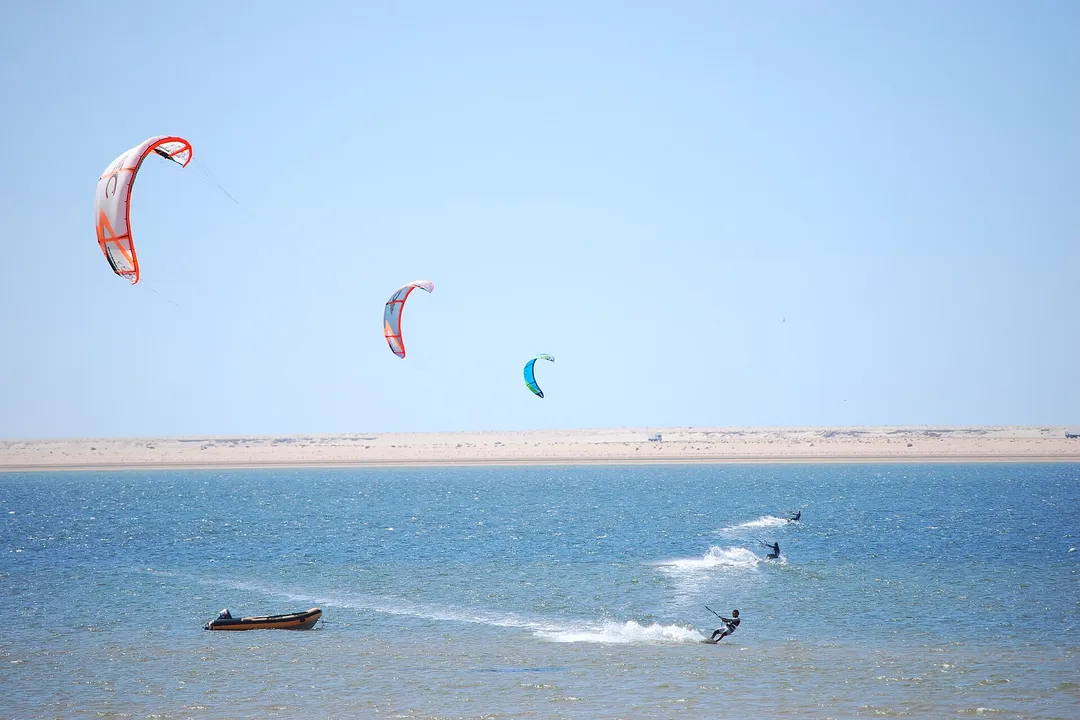 Spots
Spots
Twenty-five kilometres of empty lagoon, a boat behind you and flamingos on the sandbanks. Here is how the day runs.
Read More