Planning your first kitesurfing holiday in Morocco? Dakhla is an excellent destination to discover kitesurfing, thanks to its vast lagoon, open landscapes and conditions that can suit beginners as well as experienced riders.
Located between the Sahara Desert and the Atlantic Ocean, Dakhla offers a unique setting for a watersports holiday. Whether you are travelling alone, as a couple or with friends, this guide explains everything you need to know before booking your first kitesurfing lessons.
1. Why Choose Dakhla for Kitesurfing?
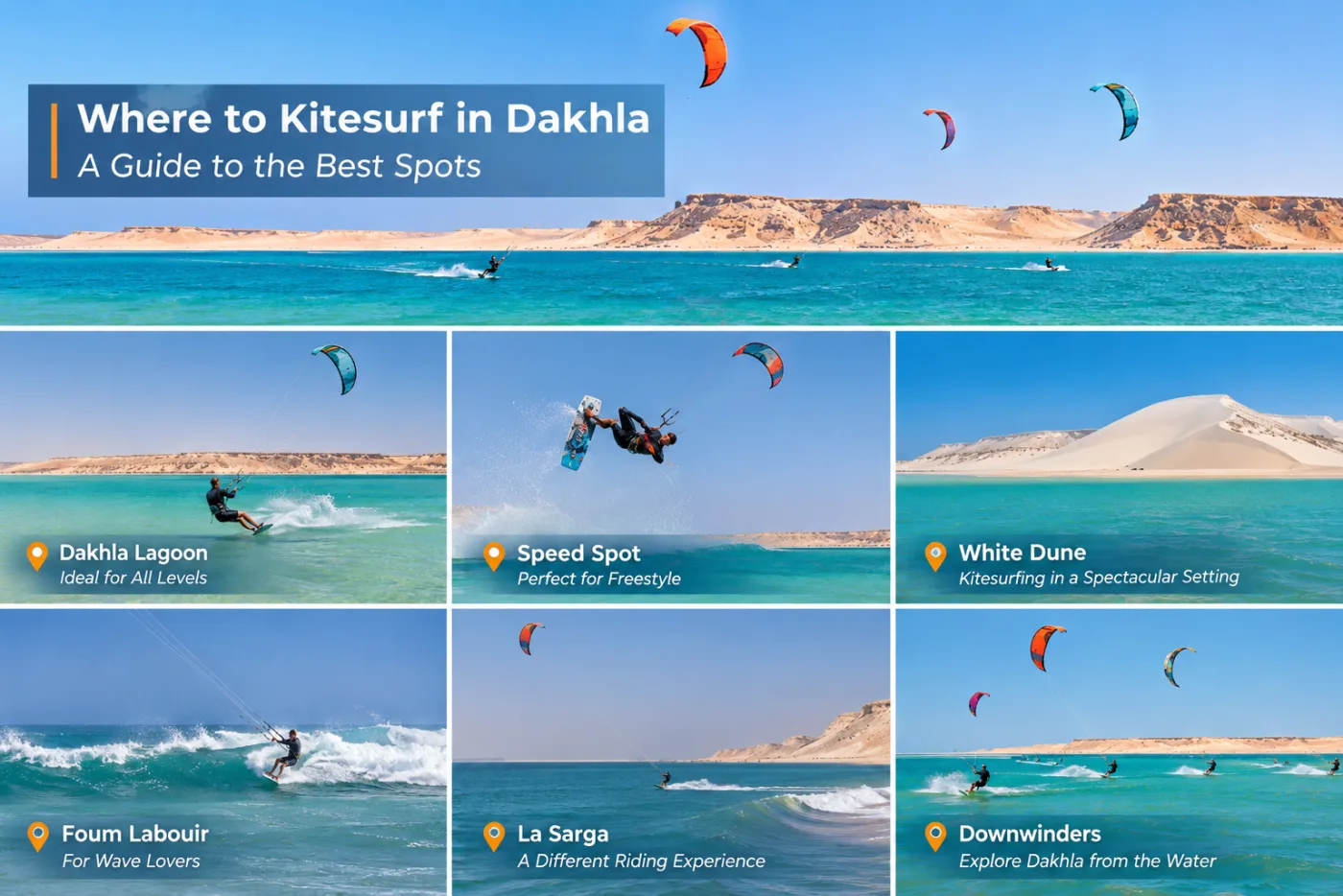
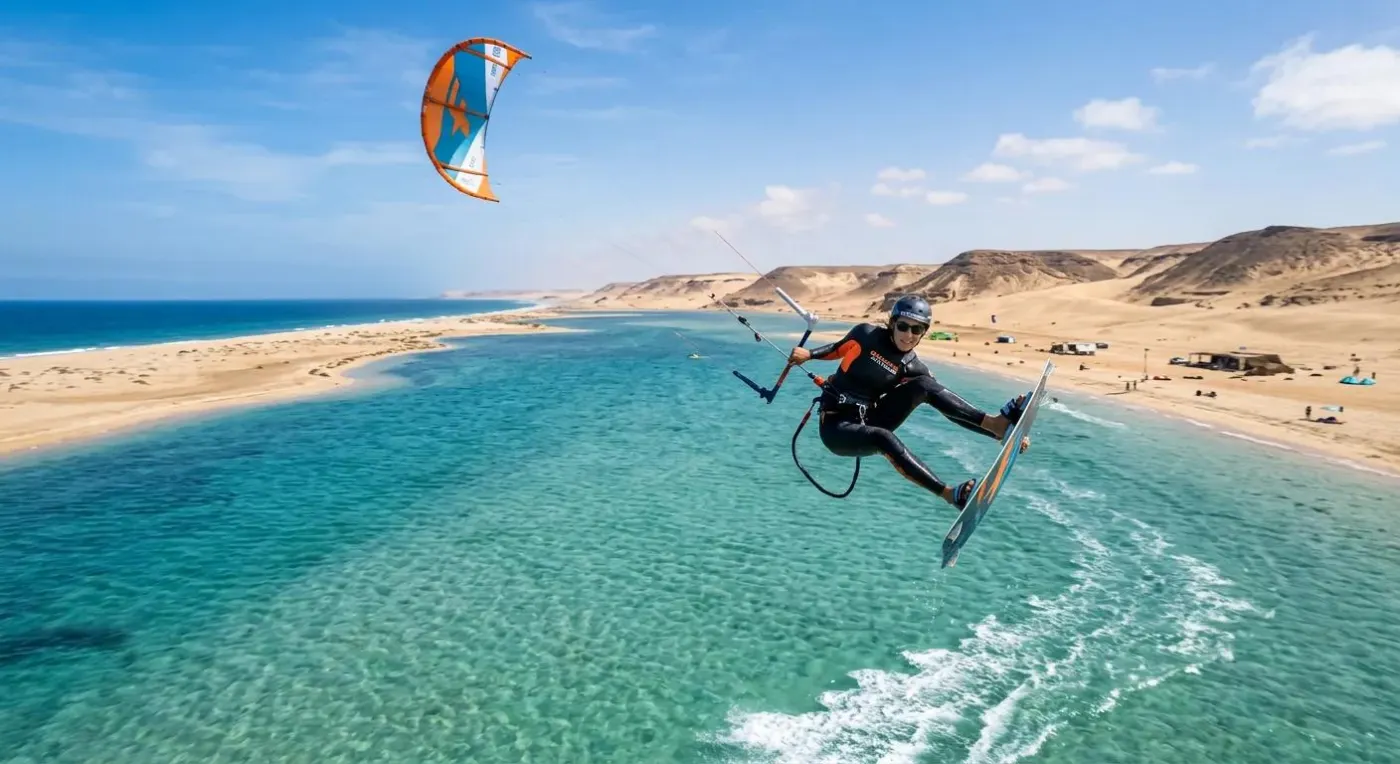
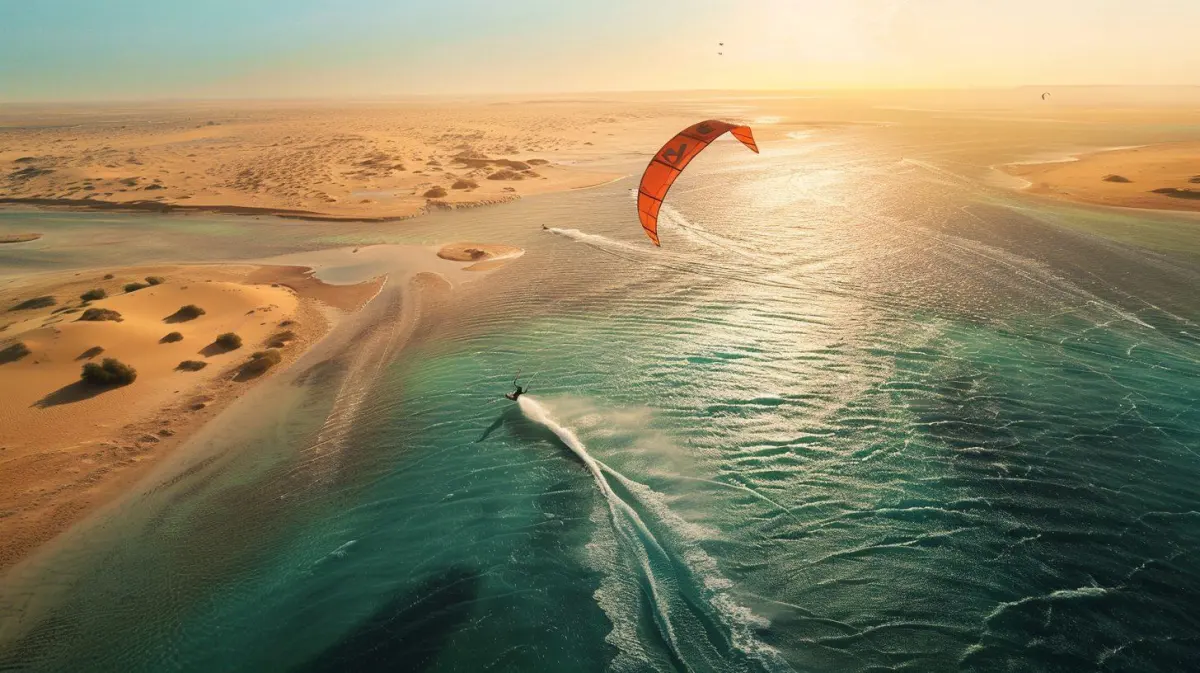
Dakhla has become a popular destination for kitesurfers from around the world. Its lagoon offers large areas of relatively flat water, while the surrounding desert creates a beautiful backdrop for days spent on the water.
Here are some of the reasons to consider Dakhla for your first kitesurfing experience:
- A spacious lagoon: The shallow areas can make practising basic skills easier in suitable conditions.
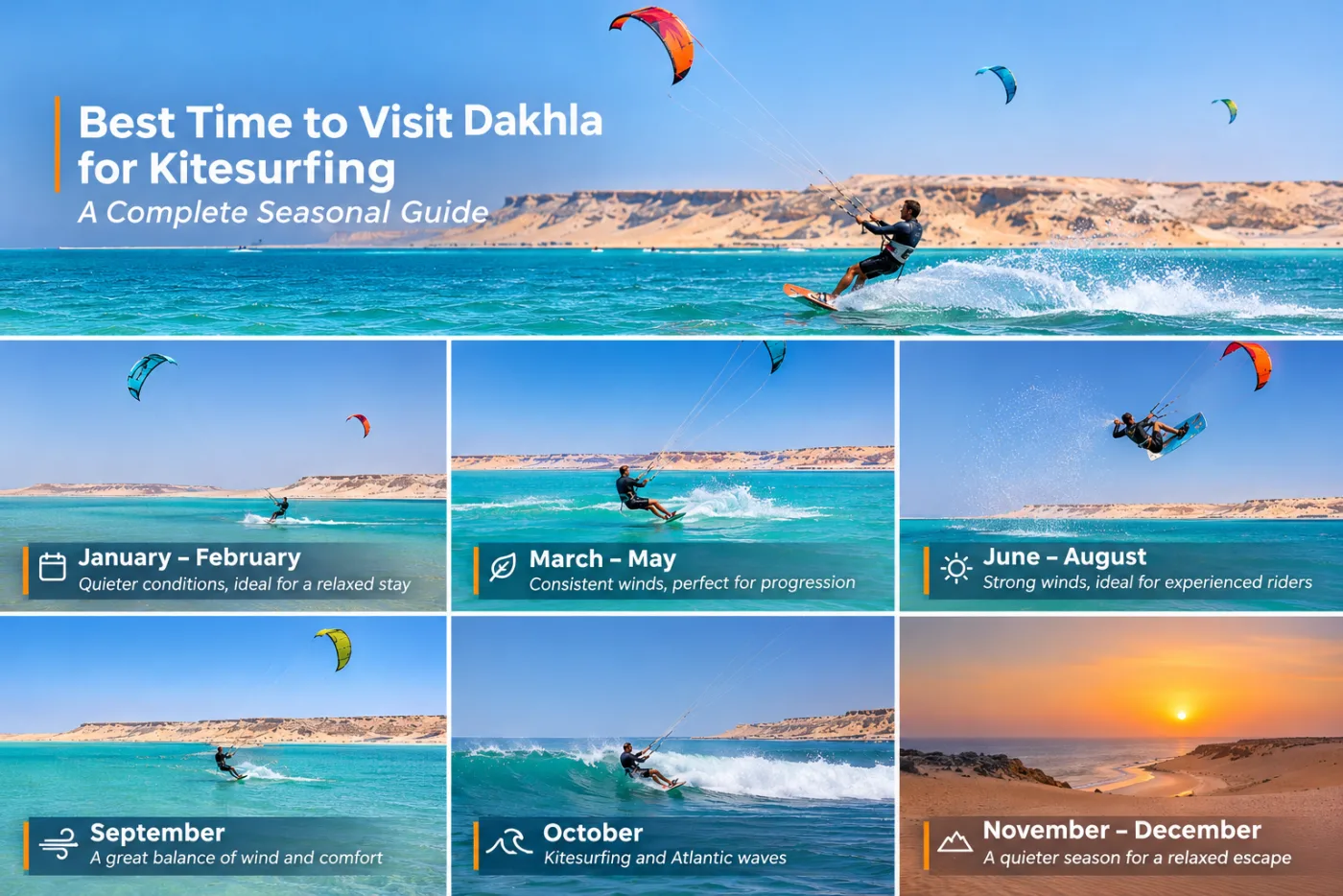
- A windy destination: Dakhla is known for its regular winds, although conditions vary from day to day.
- Professional instruction: Beginners can learn essential techniques with qualified instructors.
- A unique natural setting: Enjoy turquoise water, sandy dunes and spectacular desert landscapes.
- Different learning options: Choose private lessons, semi-private coaching or group courses according to your preferences.
You do not need previous kitesurfing experience to get started. A beginner course introduces you to the equipment, wind conditions and essential safety techniques before you progress onto the water.
2. Is Dakhla Suitable for Beginner Kitesurfers?
Yes. Dakhla can be a great place to learn kitesurfing, particularly in suitable lagoon conditions with qualified instruction.
Your first lessons focus on understanding how the kite works rather than immediately trying to ride a board.
A typical beginner course introduces you to:
- Understanding wind direction and the wind window.
- Learning how to control the kite.
- Understanding safety systems and emergency procedures.
- Practising body dragging in the water.
- Recovering your board and attempting your first water starts.
- Developing balance, direction control and basic riding skills.
Progress depends on several factors, including wind conditions, physical coordination, confidence and the amount of time spent practising. Some students begin riding during their first course, while others need additional lessons to develop their skills.
The most important thing is to learn progressively and never rush the safety fundamentals.
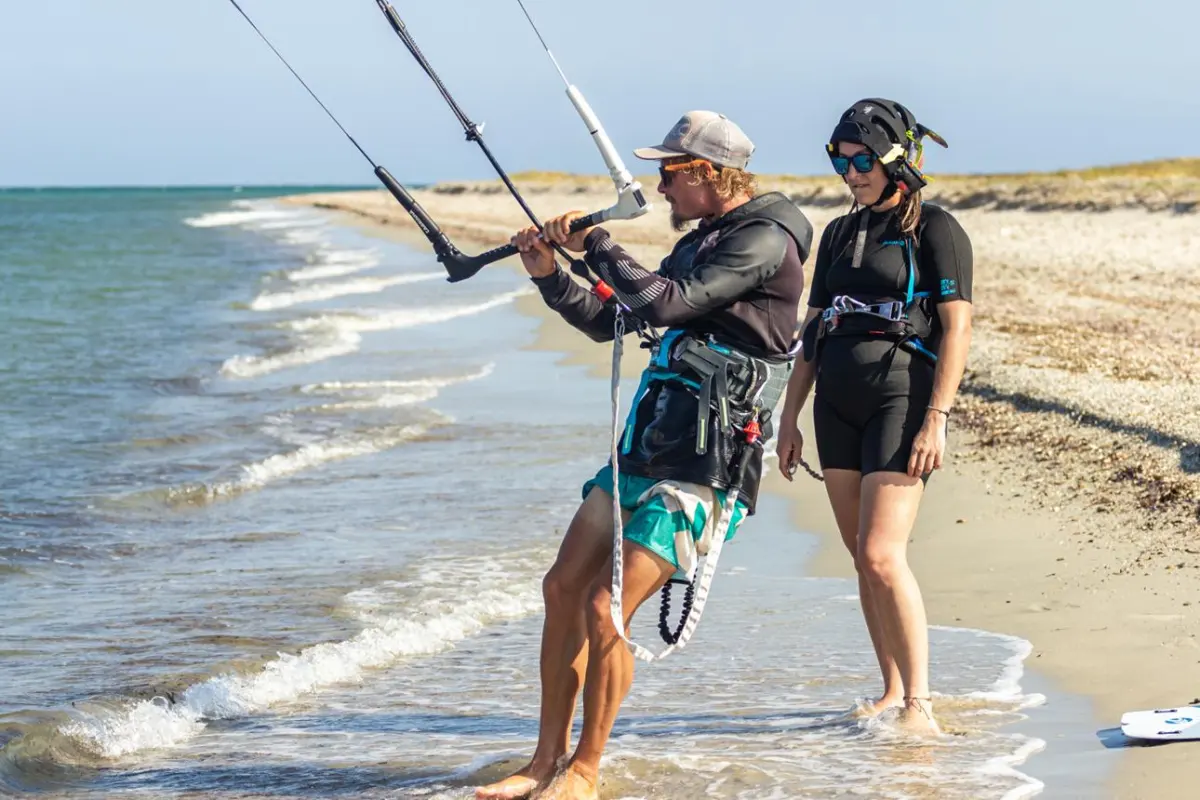
3. How Many Kitesurfing Lessons Do You Need?
The number of lessons you need depends on your goals, previous experience and learning pace. For a complete beginner, a structured course spread over several days is generally more useful than trying to learn everything in a single session.
Here is a general overview of what different lesson durations can offer.
2 Hours: Discover Kitesurfing
A discovery lesson is a good introduction if you want to try the sport before committing to a longer course.
You can learn the basics of kite control, understand the equipment and discover what it feels like to practise under an instructor’s supervision.
4–6 Hours: Build Your Foundations
With additional practice, you can spend more time developing kite control, learning safety procedures and becoming comfortable in the water.
Your progress will depend on how quickly you master each stage.
8–12 Hours: Develop Your Beginner Skills
A longer course gives you more time to practise essential techniques, including body dragging, board recovery and water starts.
With 12 hours spread across several days, many beginners can make meaningful progress towards their first rides. However, riding independently and consistently is not guaranteed within a fixed number of hours.
Our recommendation: If you are travelling to Dakhla specifically to learn kitesurfing, consider a course that allows enough time for practice, rest and changing wind conditions.
Explore our kitesurfing lessons and courses in Dakhla to compare the available learning formats.